Department of Mechanical Engineering Graduate Seminar
PRESENTATION: High-speed flows are challenging to predict due to their multi-physics nature. Simulations are the tool of choice for predicting the operational capabilities of high-speed vehicles, but ground-test experiments are needed for verification and validation. In particular, non-intrusive off-body measurements of the velocity field in proximity to the vehicle are valuable for comparison to simulations. In this talk I will discuss the application of femtosecond laser electronic excitation tagging (FLEET). This is a technique that is used to extract the velocity field in high-speed experiments where other popular techniques like particle image velocimetry (PIV) are impossible. The application of FLEET for the study of the Sandia cone-slice-ramp geometry will be discussed. Further, a novel variation of FLEET velocimetry will be presented based on the use of highly time-resolved photodiodes. I will also comment on possible future research directions towards bridging the gap between molecular-tagging-based velocimetry and PIV.
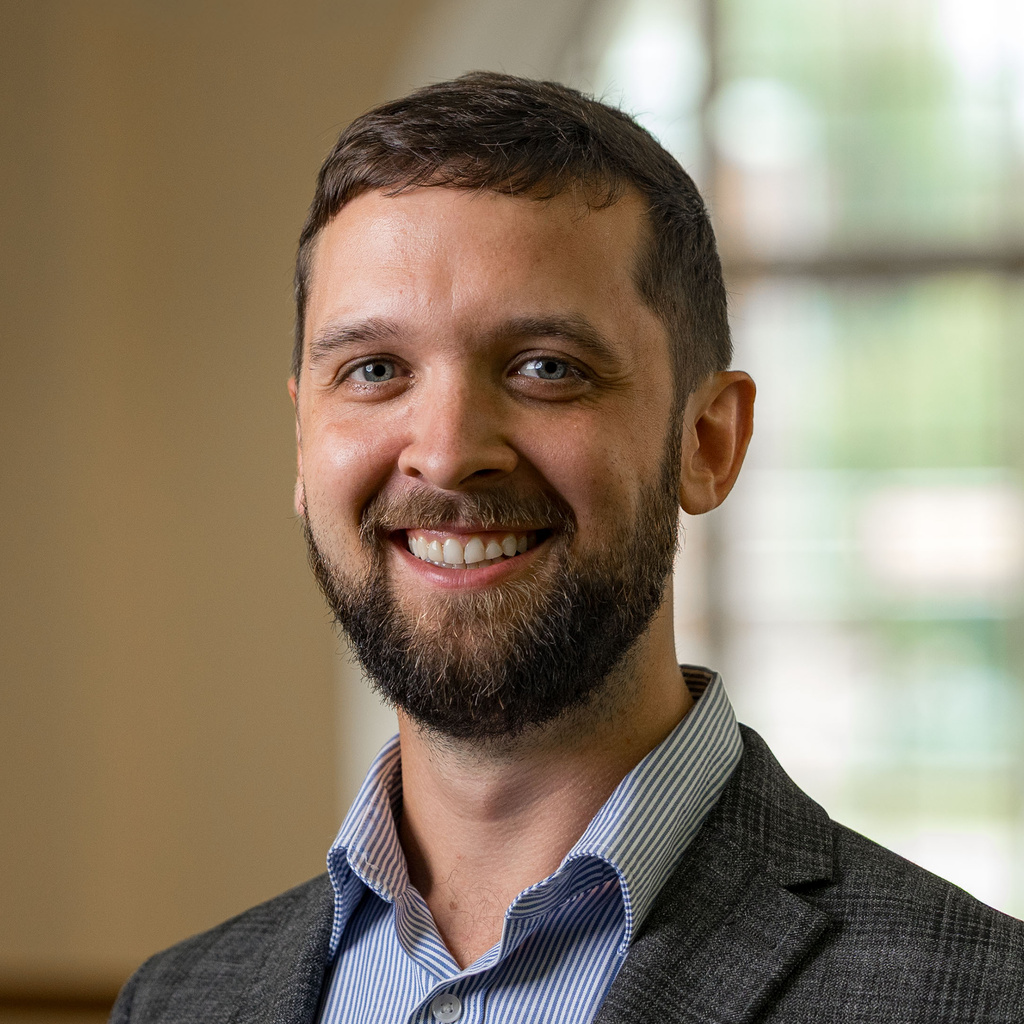
PRESENTER: Douglas W. Carter is an Assistant Professor in the Department of Mechanical Engineering at the University of Wisconsin-Madison and the head of the Experimental Turbulent Flows Lab (ETFL). He earned his BS degree in Mechanical Engineering from the University of New Hampshire in 2014, and an MS and Ph.D. in Aerospace Engineering and Mechanics from the University of Minnesota in 2017 and 2019, respectively. He held two postdoctoral positions, one at the University of Southampton in Southampton, UK and one at Sandia National Laboratories in Albuquerque, NM. He is an expert in turbulent flows at both subsonic and supersonic speeds as well as in numerous experimental diagnostics and data-driven methods. He is a member of the American Physical Society (APS) and the American Institute of Aeronautics and Astronautics (AIAA) where he is an active member of the Aerodynamic Measurement Technologies (AMT) technical committee. He is the recipient of a 2026 AFOSR Young Investigator Program (YIP) award.